Author: vanessa

Fire Suppression Inspection Cycles: What Contractors Need to Track for Every Account
If you’re a fire protection contractor managing accounts across a dozen kitchens or a hundred, inspection tracking isn’t a favor you do clients. It’s the backbone of your service revenue and your liability protection. In this guide from NAKS, we break down what NFPA 96 actually requires and how to build a tracking system that…
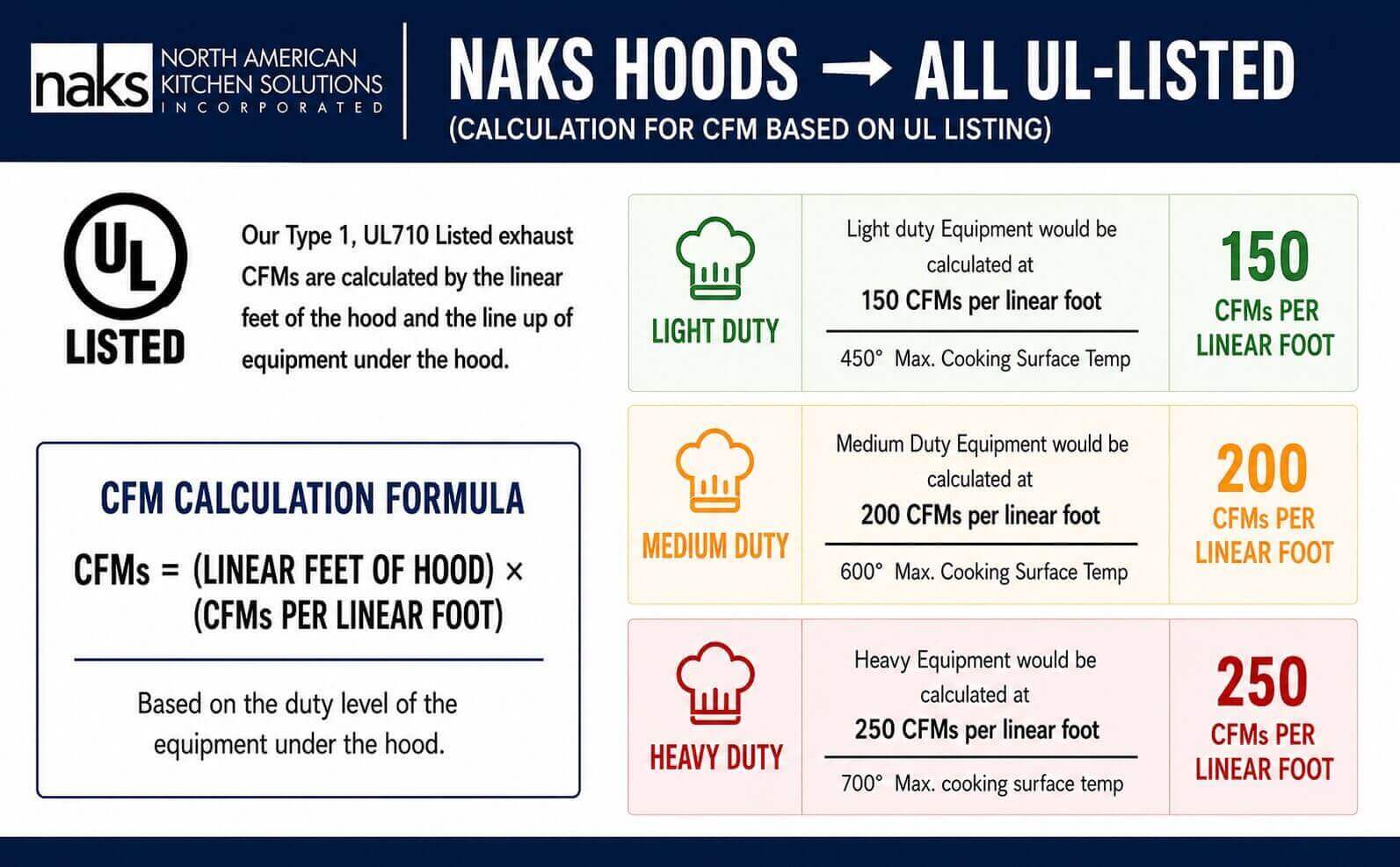

How CFM Is Calculated for UL 710 Listed Commercial Kitchen Exhaust Hoods
For resellers and installers specifying commercial kitchen ventilation, CFM calculation is the foundational variable that drives every downstream decision — fan selection, duct sizing, and makeup air system design. NAKS, Inc. Type 1 exhaust hoods are all UL 710 listed, which enables a defined, reduced CFM calculation method based on hood linear footage and equipment…
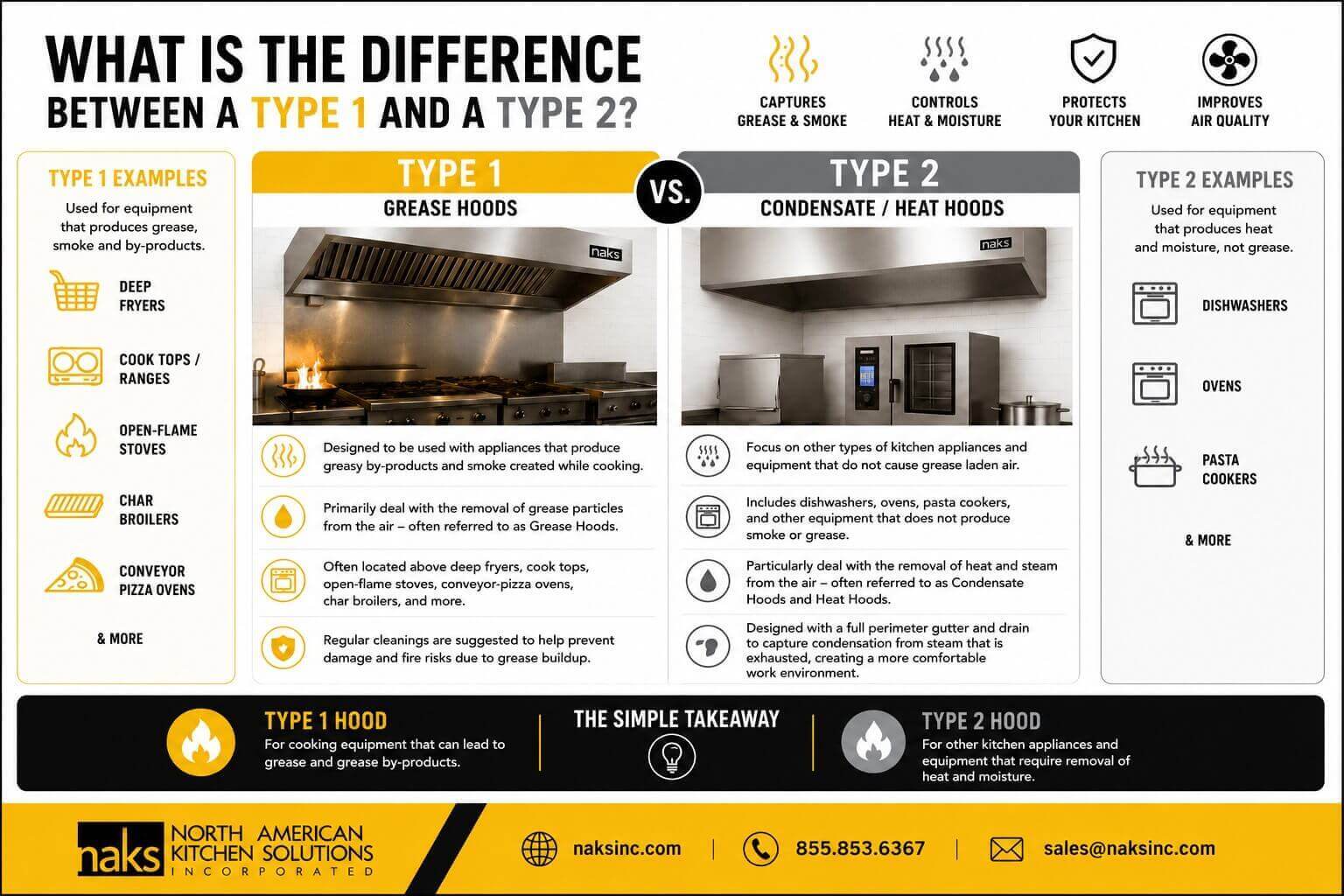

Type 1 vs. Type 2 Commercial Kitchen Hoods: What Installers and Designers Need to Know
Specifying the wrong hood type is one of the most consequential errors in a commercial kitchen design. Type 1 and Type 2 hoods are built for different exhaust loads, carry different construction and fire suppression requirements, and are not interchangeable. This post from the commercial kitchen ventilation experts at NAKS, Inc. covers the core differences,…


NFPA 96 Guide: Commercial Kitchen Safety & Compliance
Understanding NFPA 96 standards isn’t optional—it’s essential for keeping commercial kitchens safe, compliant, and operational. Whether you’re a contractor, installer, or reseller, knowing the latest NFPA 96 requirements can help you avoid costly mistakes and protect your clients. Here’s what you need to know, straight from the experts at NAKS, Inc. What Is NFPA 96?…
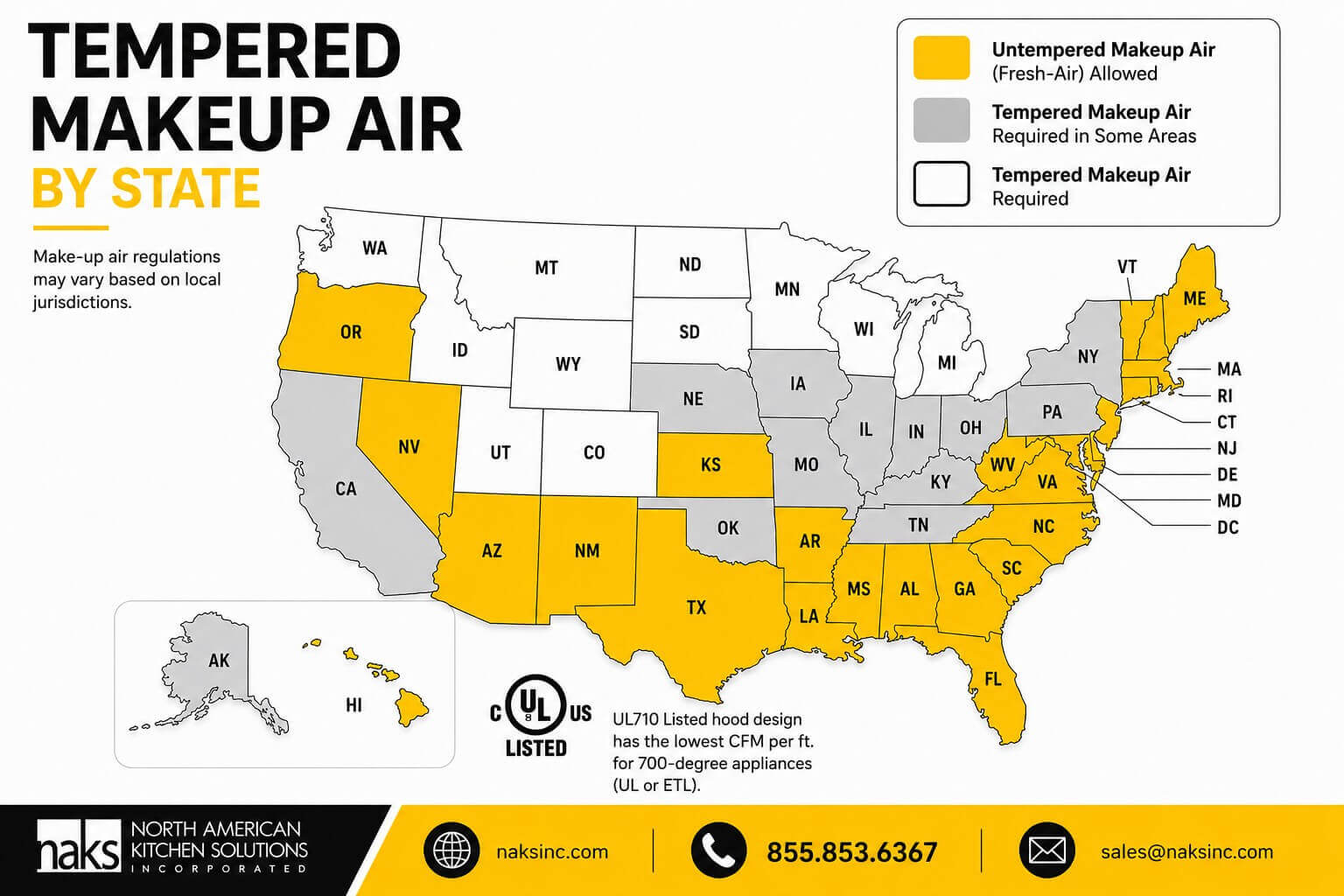
Tempered Makeup Air Requirements by State: A Reseller’s Specification Reference
Makeup air compliance is one of the most frequently misread variables in commercial kitchen ventilation specification. Whether a project requires tempered or untempered makeup air depends on state code, local jurisdiction, and in some cases the UL listing of the hood being installed. For resellers supporting installers and designers across multiple markets, understanding the compliance…


Round Ductwork for Commercial Kitchen Exhaust Systems: Specification Guide for Resellers and Installers
Ductwork specification is where ventilation projects most frequently encounter field problems — wrong clearance assumptions, undersized diameters, and non-listed components that fail inspection. NAKS factory-built round grease duct is UL listed under UL1978 and UL2221, requires no field welding, and is available in configurations covering clearance-to-combustibles requirements from 18 inches down to zero. This guide…

Kidde vs. Ansul Commercial Kitchen Fire Suppression: Specs, Installation, and Selection Criteria
Both Kidde and Ansul systems meet UL 300 requirements for commercial kitchen fire suppression. For resellers, installers, and kitchen designers, the meaningful differences are in nozzle configuration, pre-piping, detector compatibility, and jobsite installation time. This post from the commercial kitchen ventilation experts at NAKS, Inc. breaks down both systems at the specification level. UL 300…


The Importance of Regular Exhaust Hood Cleaning and Maintenance
Running a commercial kitchen means juggling safety, performance, and compliance every day—but one of the most critical (and often overlooked) priorities is exhaust hood cleaning and maintenance. Grease buildup, poor airflow, and neglected systems can quickly turn into costly—and dangerous—problems. The good news? With regular commercial hood cleaning, you can protect your kitchen, your staff,…

Troubleshooting Noisy Commercial Exhaust Hoods | NAKS, Inc.
Experiencing bothersome noise from your commercial exhaust hood? Learn effective troubleshooting steps and maintenance tips in this guide from NAKS, Inc.


Geographical Considerations When Selecting a Makeup Air Unit
Choosing the right make up air unit for a commercial kitchen isn’t just about size or airflow, it’s about location. Climate, altitude, air quality, and local codes all play a major role in how your commercial kitchen ventilation system performs. This guide breaks down the key geographical factors you need to consider to ensure your…