You arrive early, flip on the lights, and start your prep — then you notice it. A dark liquid dripping from the exhaust hood. Whether it’s water or grease, leaks in a commercial kitchen exhaust system should never be ignored.
Leaks are a warning sign that something isn’t functioning as intended. Understanding why your exhaust hood is leaking water — and knowing when to take action — helps protect your kitchen from fire risk, equipment damage, and costly downtime. This guide from the commercial kitchen ventilation experts at NAKS, Inc. walks you through the most common causes of exhaust hood leaks and what to do next.
Step One: Identify the Type of Leak
Not all leaks are the same. The first step is determining whether you’re dealing with water or grease.
Water Leaks: Water dripping from an exhaust fan is often noticed shortly after professional hood or duct cleaning. While exhaust systems are designed to be watertight, small imperfections can occasionally allow moisture to escape. Common causes include:
- Residual water from duct cleaning
- Minor weld imperfections
- Condensation buildup inside ductwork
Water typically appears thinner, lighter in color, and moves more quickly than grease.
Grease Leaks: Grease leaks tend to be darker, thicker, and slower-moving. These leaks are more serious and pose a higher fire risk. Possible sources include:
- Weak or compromised weld points
- Grease troughs beneath filters
- Access doors or seams in the ductwork
If grease is present, the system should be evaluated immediately by a qualified professional.
Why Leaks in Your Commercial Kitchen Exhaust System Should Never Be Ignored
Even minor leaks can lead to serious consequences over time. Risks include:
- Fire hazards from grease accumulation
- Damage to ceilings, walls, and equipment
- Failed inspections or health code violations
- Reduced lifespan of the exhaust system
Routine commercial exhaust hood maintenance helps prevent small issues from becoming major problems.
What to Do When You Spot a Leak
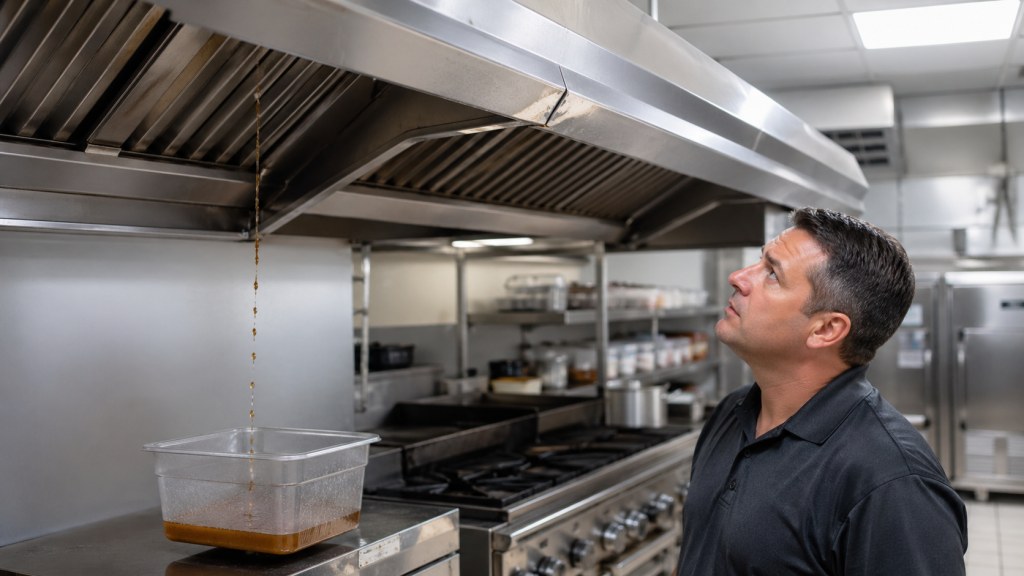
If you notice any leaking — water or grease — take action immediately. Recommended steps:
- Stop and observe – Identify where the leak appears to originate
- Document the issue – Grab your phone! Photos and notes help during service calls
- Contact a qualified maintenance provider – Repairs often require professional welding or sealing
Check warranty coverage – NAKS, Inc. offers a limited two-year warranty on workmanship and materials (with proof of purchase). Attempting temporary fixes or ignoring the issue can increase long-term risk and repair costs.
How Proper Maintenance Prevents Future Leaks
Regular service is the best defense against exhaust hood leaks. Maintenance best practices include:
- Scheduled hood and duct cleanings
- Inspection of welds and seams
- Monitoring grease collection systems
- Verifying access doors and joints remain sealed
A well-maintained system performs better, lasts longer, and keeps your kitchen compliant.
Common Questions About Commercial Kitchen Exhaust Leaks
Q: Why is my exhaust hood leaking water after cleaning?
A: Residual moisture or condensation can escape through small imperfections after professional duct cleaning.
Q: Is water dripping from an exhaust fan dangerous?
A: While not immediately hazardous, water leaks should be addressed to prevent long-term damage and potential safety issues.
Q: How can I tell if the leak is grease or water?
A: Grease is thicker, darker, and moves slowly, while water is lighter and flows more quickly.
Q: Can a leaking exhaust hood cause a fire hazard?
A: Yes. Grease leaks in particular increase fire risk and should be repaired immediately.
Q: How often should commercial exhaust hoods be inspected?
A: Regular inspections should occur alongside routine cleaning schedules or whenever unusual leaks or performance issues appear.
Why NAKS Exhaust Systems Are Built for Reliability
NAKS exhaust hood systems are engineered with durability and safety in mind. From compensating (short cycle) hoods to perforated supply plenum (PSP) models, each system is designed to support proper airflow while minimizing maintenance concerns.
If issues arise, our team is available to help assess the situation and recommend next steps. We’re here to help keep your operation safe, efficient, and inspection-ready. Contact us today!