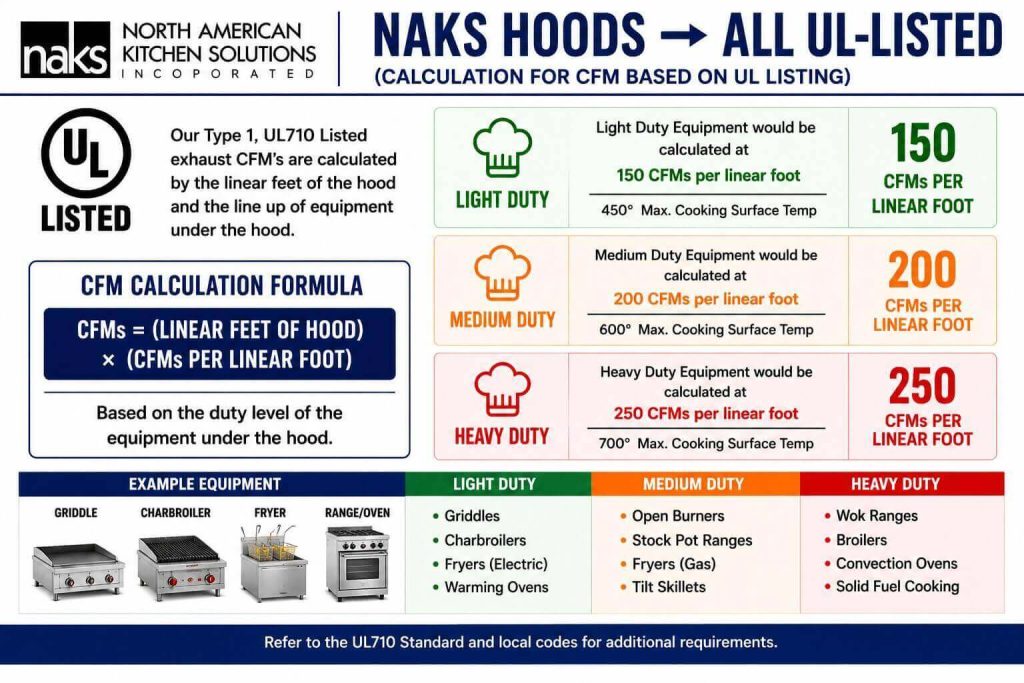
Equipment classification is the variable that resellers and installers most frequently get wrong at the specification stage, and it is the variable with the most direct impact on exhaust CFM, fan sizing, duct diameter, and makeup air volume. Under the UL 710 standard, every piece of cooking equipment beneath a Type 1 hood falls into one of three duty level categories, each with a defined CFM-per-linear-foot exhaust rate.
In this guide, the commercial kitchen ventilation experts at NAKS, Inc. break down the differences.
Why Equipment Classification Drives the Entire Ventilation Specification
The duty level of the cooking equipment beneath a hood determines the CFM-per-linear-foot rate used to calculate total exhaust volume. That number cascades directly into every other component in the ventilation system.
- Light-duty equipment calculates at 150 CFMs per linear foot
- Medium-duty equipment calculates at 200 CFMs per linear foot
- Heavy-duty equipment calculates at 250 CFMs per linear foot
- Mixed lineups default to the highest duty level present beneath the hood
A misclassification at this stage does not stay contained — it propagates through fan selection, duct sizing, and makeup air design.
Light Duty Equipment — 150 CFMs Per Linear Foot
Light-duty equipment produces heat and grease at lower intensities, with a maximum cooking surface temperature of 450 degrees. This classification carries the lowest CFM-per-linear-foot rate under the UL 710 standard.
- Griddles
- Charbroilers
- Electric fryers
- Warming ovens
Light-duty classification applies only where all equipment beneath the hood falls within this category. A single medium or heavy-duty appliance in the lineup upgrades the classification for the entire hood section.
Medium Duty Equipment — 200 CFMs Per Linear Foot
Medium-duty equipment operates at higher temperatures and produces greater exhaust loads, with a maximum cooking surface temperature of 600 degrees.
- Open burners
- Stock pot ranges
- Gas fryers
- Tilt skillets
Gas fryers are frequently misclassified as light-duty because electric fryers fall in that category. Gas fryers are medium-duty — a distinction with a direct impact on CFM calculation.
Heavy Duty Equipment — 250 CFMs Per Linear Foot
Heavy-duty equipment represents the highest exhaust demand category under the UL 710 standard, with a maximum cooking surface temperature of 700 degrees.
- Wok ranges
- Broilers
- Convection ovens
- Solid fuel cooking equipment
Solid fuel cooking equipment — wood-fired ovens, charcoal grills — always defaults to heavy-duty classification regardless of actual operating temperature. Local jurisdictions may impose additional requirements above the UL 710 baseline for solid fuel applications.

Common Equipment Classification Errors
Misclassification is the most common specification error in commercial kitchen ventilation, and it is almost always in the direction of underestimating duty level.
- Gas fryers are classified as light-duty instead of medium-duty
- Convection ovens are classified as medium-duty instead of heavy-duty
- Mixed lineups are calculated at the lower duty rate rather than defaulting to the highest
- Equipment substitutions after installation not triggering a recalculation
Verify equipment manufacturer documentation and UL listing data for any appliance whose duty classification is ambiguous before finalizing the CFM calculation.
FAQ: CFM Calculation by Equipment Type
Q: What if the equipment lineup changes after the hood is installed?
A: Any change to equipment type or duty level requires re-evaluation of the CFM calculation and may require fan or duct modifications to maintain compliance.
Q: Are combination appliances — equipment that performs multiple cooking functions — classified at the higher duty level?
A: Yes. When an appliance spans multiple duty categories, classify it at the higher level for CFM calculation purposes.
Q: Does solid fuel cooking equipment always require heavy-duty classification?
A: Yes. Solid fuel applications are always heavy-duty under the UL 710 standard, and local jurisdictions may impose additional requirements beyond the baseline.
Q: Where can I verify the duty classification of a specific appliance?
A: Consult the equipment manufacturer’s documentation and UL listing data. When in doubt, classify at the higher duty level and confirm with the AHJ.
Equipment Classification Support for Resellers and Installers
Getting equipment classification right at the design phase is the single most effective way to prevent specification errors downstream. NAKS supports resellers and installers with technical guidance on equipment classification and CFM calculation across all project types. Contact us today!