
Food Truck Ventilation Hood Installation Guide: How to Install a Safe and Compliant Hood System
Installing a proper food truck ventilation hood is one of the most important steps when building or upgrading a mobile kitchen. A well-designed food truck hood system removes heat, smoke, and grease-laden vapors, protecting staff, customers, and equipment.
Without proper ventilation, food trucks face serious risks, including fire hazards, equipment damage, failed inspections, and unsafe working conditions.
This guide from the experts at NAKS, Inc. explains how to select and install an exhaust hood for food trucks, including roof vent requirements, ductwork considerations, and safety components.
Why Proper Ventilation Is Critical in Food Trucks and Concession Trailers
Mobile kitchens operate in extremely compact spaces, which makes ventilation even more important than in traditional commercial kitchens.
A properly installed food trailer hood vent provides three critical benefits:
1. Fire Safety Protection: Grease vapor produced during cooking can accumulate inside ductwork and equipment. This buildup is highly flammable and increases fire risk. A properly installed food truck hood system helps:
- Capture grease before it enters ductwork
- Remove heat from cooking equipment
- Support fire suppression system effectiveness
- Reduce fire risk and improve overall safety
Fire safety compliance is essential for passing inspections and protecting your investment.
2. Smoke, Heat, and Odor Removal: Cooking equipment produces heat, smoke, and odors that quickly build up inside enclosed trailers. A properly functioning food truck ventilation hood:
- Removes smoke and airborne grease
- Improves air quality for staff
- Reduces excessive heat buildup
- Prevents odors from lingering
This creates a safer and more comfortable working environment.
3. Consistent Cooking Performance: Excess heat and moisture can negatively affect food quality and equipment performance. Proper ventilation helps:
- Maintain consistent cooking temperatures
- Prevent excess moisture buildup
- Protect cooking equipment
- Improve food consistency and quality
This ensures reliable performance and customer satisfaction.
Choosing the Right Food Truck Hood System
Selecting the correct exhaust hood for food trucks depends on your equipment, trailer size, and ventilation requirements.
Hood Size and Coverage
Your hood must fully cover all cooking equipment, including:
- Fryers
- Grills
- Griddles
- Ranges
Proper coverage ensures effective capture of heat, smoke, and grease.
Airflow Requirements (CFM)
Airflow capacity is measured in cubic feet per minute (CFM). The required airflow depends on:
- Type of cooking equipment
- Heat output
- Trailer size
- Hood dimensions
Choosing the correct airflow ensures effective ventilation.
Type 1 vs Type 2 Hoods
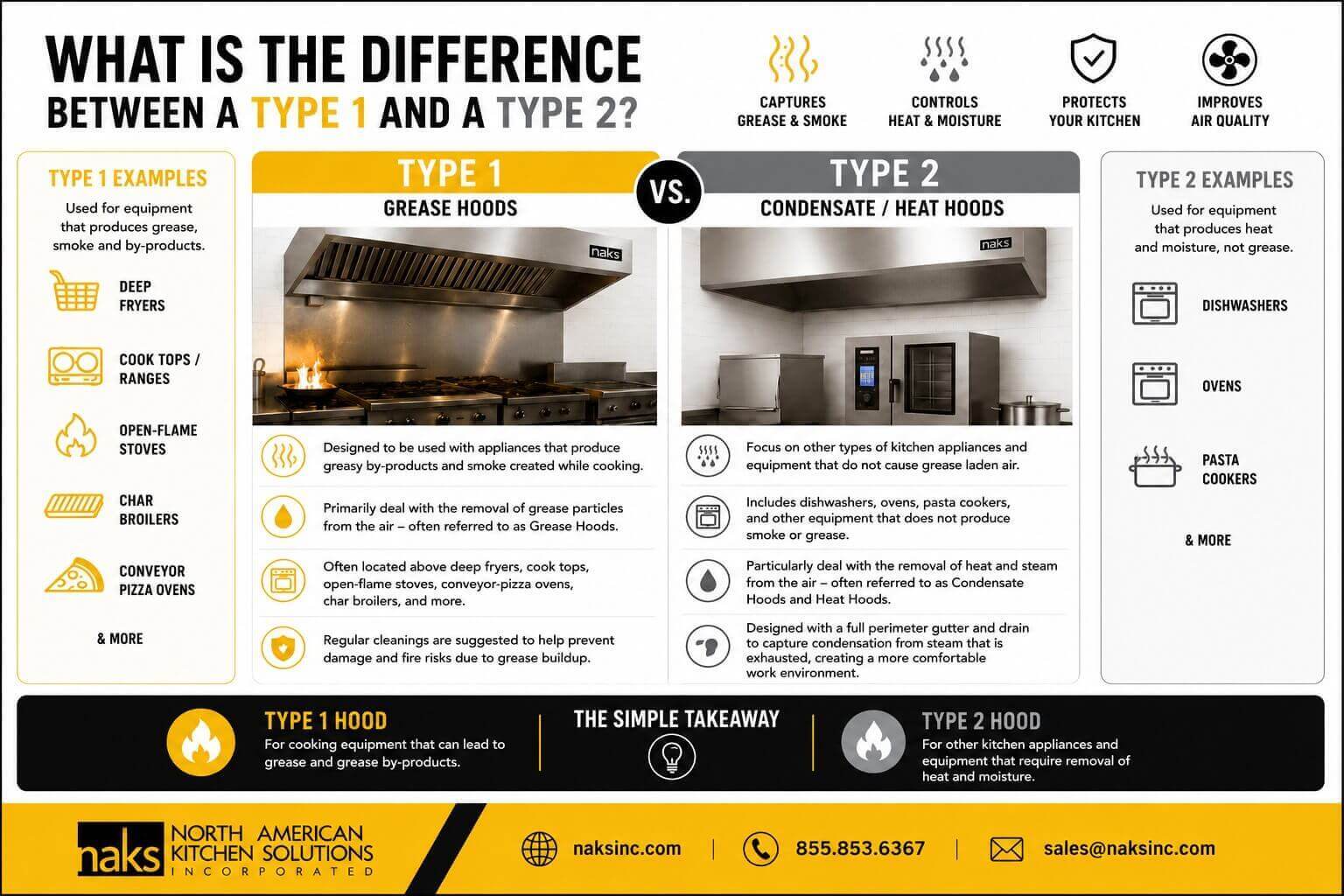
Most food trucks require a Type 1 hood, which is designed to capture grease-laden vapors and includes grease filters and fire suppression compatibility.
Type 1 hoods are required for equipment such as:
- Fryers
- Grills
- Griddles
- Charbroilers
Type 2 hoods are used only for heat and steam without grease.
Key Components of a Food Truck Hood Vent System
A complete food truck hood system includes several critical components:
- Hood canopy
- Grease filters
- Exhaust ductwork
- Food truck roof vent
- Exhaust fan
- Fire suppression system
- Electrical connections
Each component must be properly installed for safe and effective operation.
Step-by-Step Food Truck Hood Installation Process
Professional installers typically follow these steps:
1. Plan Equipment and Hood Layout: Determine the best hood placement based on equipment location and available space. Ensure proper clearance and accessibility.
2. Install the Food Truck Roof Vent: Cut and seal roof penetrations for ductwork and exhaust fans. Proper sealing prevents leaks and protects the trailer structure.
3. Mount the Hood System: Securely mount the food truck ventilation hood to the trailer ceiling or wall. Ensure the hood is level and properly supported.
4. Install Exhaust Ductwork: Connect rigid metal ductwork between the hood and roof vent. Rigid ductwork provides:
- Better fire protection
- Improved airflow performance
- Long-term durability
Seal all duct connections properly.
5. Install the Exhaust Fan: Mount the exhaust fan on the trailer roof and connect it to the duct system. The fan removes heat, smoke, and grease from the trailer.
6. Install Fire Suppression System: Fire suppression systems are required for most grease-producing equipment.
Ensure the system:
- Covers all cooking appliances
- Is properly connected
- Meets local fire code requirements
7. Complete Electrical Connections: Connect hood lights and exhaust fan wiring using a licensed electrician. Proper wiring ensures safe and reliable operation.
8. Test the Full Hood Ventilation System: Before operating the food truck, verify that:
- The hood captures smoke properly
- The exhaust fan operates correctly
- Airflow is sufficient
- Fire suppression system is functional
Testing ensures safe operation and inspection readiness.
Maintenance Requirements for Food Truck Hood Systems
Regular maintenance keeps your food truck ventilation hood working safely and efficiently.
Maintenance includes:
- Cleaning grease filters regularly
- Inspecting ductwork for grease buildup
- Testing fire suppression systems
- Inspecting exhaust fan operation
Routine maintenance reduces fire risk and improves system performance.
Why Proper Installation Protects Your Food Truck Investment
A properly installed food truck hood system ensures:
- Fire safety compliance
- Reliable ventilation performance
- Improved equipment lifespan
- Safer working conditions
- Successful inspection approval
Investing in proper ventilation protects both your staff and your business.
Partner With NAKS, Inc. for Reliable Food Truck Ventilation Solutions
NAKS, Inc. provides UL-listed ventilation solutions designed specifically for food trucks and concession trailers. Our systems are engineered for safety, performance, and compliance.
Our ventilation solutions offer:
- Reliable grease removal performance
- Code-compliant fire safety design
- Durable, long-lasting construction
- Efficient airflow performance
- Simplified installation
Contact NAKS, Inc. today to learn more about installing the right food truck ventilation hood system for your mobile kitchen.
Frequently Asked Questions About Food Truck Ventilation
1. Is a ventilation hood required for food trucks?
Yes. Most food trucks require a Type 1 food truck ventilation hood if cooking equipment produces grease, smoke, or heat. Local fire and health codes require proper ventilation systems for safety.
2. What size exhaust hood is needed for a food truck?
The hood must fully cover all cooking equipment and provide sufficient airflow (CFM) based on the equipment’s heat output and trailer size.
3. What is a food truck roof vent?
A food truck roof vent allows exhaust air, heat, and grease vapors to exit the trailer through ductwork and an exhaust fan. It is a critical component of the ventilation system.
4. How much airflow does a food truck hood system need?
Airflow requirements vary depending on cooking equipment, but proper airflow is essential to remove heat, smoke, and grease safely and efficiently.
5. How often should food truck hood systems be cleaned?
Grease filters should be cleaned regularly, and ductwork and exhaust systems should be inspected and cleaned according to local fire code requirements.