Choosing the right make up air unit for a commercial kitchen isn’t just about size or airflow, it’s about location. Climate, altitude, air quality, and local codes all play a major role in how your commercial kitchen ventilation system performs. This guide breaks down the key geographical factors you need to consider to ensure your system is efficient, compliant, and built for your environment.
Here’s what you need to know, straight from the experts at NAKS, Inc.
Quick Answer: Does Location Impact Makeup Air Units?
Yes, your geographic location directly affects:
- Air temperature and humidity
- Air density and airflow performance
- Outdoor air quality
- Local code requirements
- Energy efficiency and operating costs
Choosing the wrong system for your environment can lead to poor performance and higher costs.
Why Makeup Air Matters in Commercial Kitchens
A commercial kitchen make up air unit replaces the air removed by your exhaust hood.
This helps:
- Maintain balanced air pressure
- Improve indoor air quality
- Support proper exhaust hood performance
- Prevent backdrafting and airflow issues
Pro Tip: In many cases, make up air is required in commercial kitchens to meet code and safety standards.
Key Geographical Factors to Consider
1. Climate and Temperature
Your local climate determines whether you need heating or cooling capabilities.
- Cold climates: Heated makeup air units
- Hot climates: Cooling or tempered air systems
- Humid regions: Moisture control and dehumidification
Proper air tempering keeps your kitchen comfortable and efficient.
2. Altitude and Air Density
Higher elevations = lower air density.
- Impacts airflow and system performance
- Can affect combustion efficiency
- May require specialized system adjustments
Altitude-aware system design ensures consistent ventilation.
3. Outdoor Air Quality and Pollution
Air entering your kitchen matters.
- Urban areas: Higher pollution levels
- Industrial zones: Increased contaminants
- Solution: Advanced filtration systems
Cleaner intake air improves both safety and food quality.
4. Local Codes and Regulations
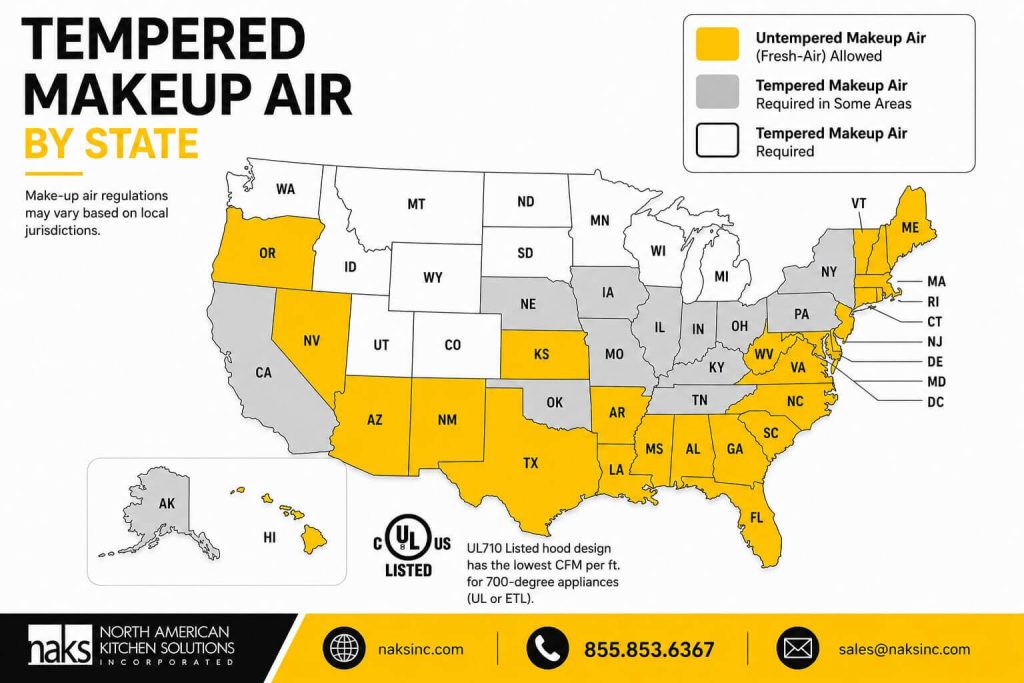
Commercial kitchen ventilation requirements vary by location.
- Some areas require dedicated makeup air systems
- Others specify airflow rates and system design
- Inspections depend on local compliance
Always confirm requirements before installation.
5. Energy Efficiency by Region
Energy costs and availability differ geographically.
- Cold regions: Higher heating demand
- Warm regions: Cooling efficiency matters
- Some areas support renewable energy options
An energy-efficient make up air unit for commercial kitchen use reduces long-term costs.
6. Maintenance Needs Based on Environment
Environmental conditions impact system upkeep.
- High humidity: More frequent cleaning
- Dust/pollution: Faster filter replacement
- Extreme temps: Increased wear on components
Planning for maintenance helps avoid downtime.
FAQs: Makeup Air Units & Commercial Kitchen Ventilation
Is make up air required in commercial kitchens?
A: In most cases, yes. Many building codes require makeup air systems to balance exhaust airflow and maintain safe ventilation.
What does a commercial kitchen make up air unit do?
A: It replaces the air removed by exhaust hoods, helping maintain air pressure, improve air quality, and support proper ventilation.
How does climate affect makeup air units?
A: Climate determines whether your system needs heating, cooling, or humidity control to maintain indoor comfort and efficiency.
Do I need different equipment at higher altitudes?
A: Yes. Higher altitudes can impact airflow and combustion, requiring adjustments or specialized system configurations.
How do local codes impact makeup air system selection?
A: Local codes may dictate airflow rates, system design, and whether makeup air is required, making compliance essential.
Choose the Right System for Your Environment
Selecting the right commercial kitchen make up air unit means more than meeting basic ventilation needs—it requires designing a system that works with your environment, not against it. From climate and altitude to local regulations, every detail matters when building a safe and efficient kitchen.
At NAKS, Inc., we help you navigate these variables with confidence by delivering ventilation solutions tailored to your location, application, and compliance needs. Whether you’re designing a new kitchen or upgrading your system, we’re here to help you get it right.
Let’s build a smarter ventilation system—together. Get your quote today!