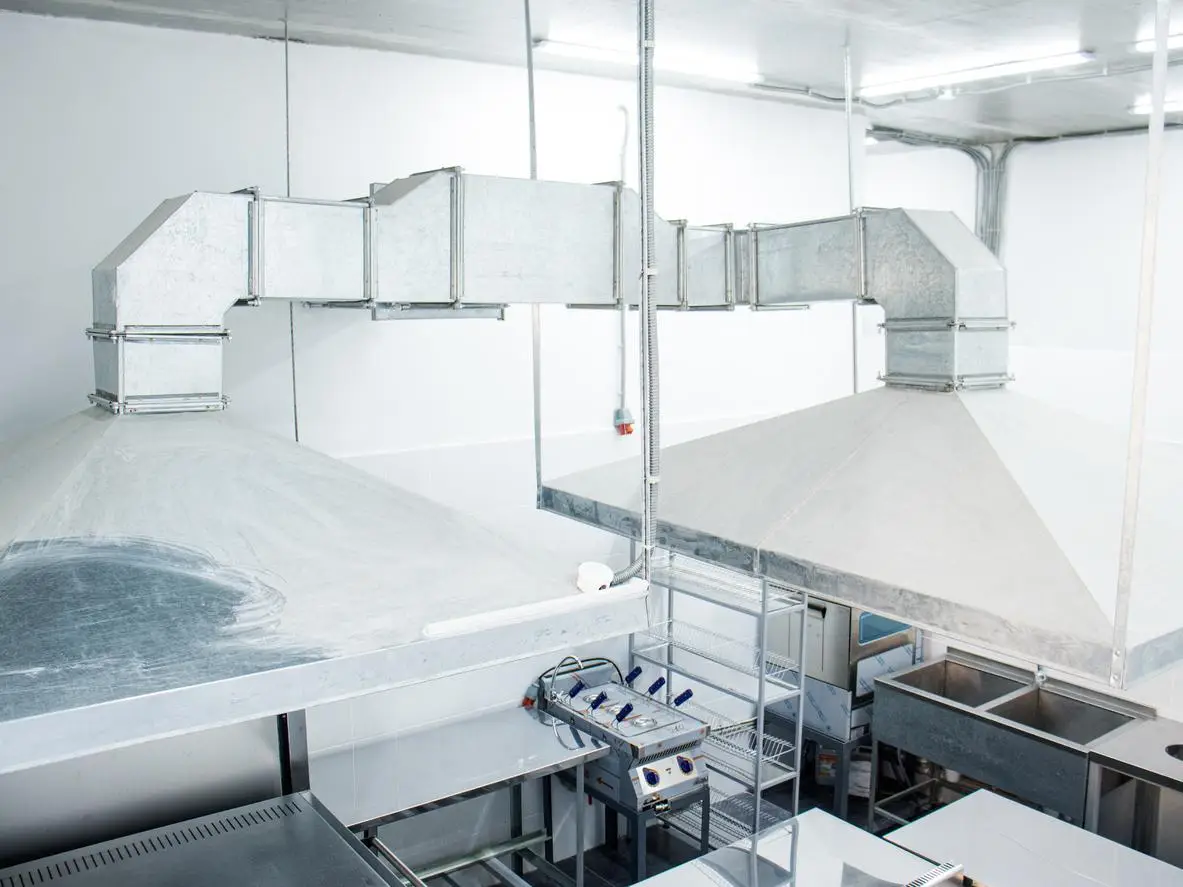
Choosing the right commercial kitchen hood ductwork is critical for safety, efficiency, and installation success. One of the most important decisions installers face is whether to use welded grease ductwork or modern no-weld kitchen ventilation ductwork.
Both options meet code requirements when properly installed, but they differ significantly in installation time, labor cost, flexibility, and long-term performance.
Understanding these differences helps contractors, engineers, and facility owners select the best hood vent ductwork for their specific project, so let’s get started!
What Is Welded Grease Ductwork?
Welded grease ductwork is the traditional standard for commercial kitchen exhaust systems. Sections of duct are permanently joined using continuous welding to create airtight, grease-tight seams. This type of kitchen ductwork is commonly used in:
- High-volume commercial kitchens
- New construction projects
- Systems requiring maximum structural durability
- Installations with complex routing
Advantages of Welded Grease Duct
Installers and engineers value welded grease ductwork for several reasons:
- Maximum leak protection: Continuous welded seams prevent grease leakage
- Superior fire safety: Fully sealed ductwork contains grease and flame spread
- Long lifespan: Durable construction withstands heat, grease, and heavy use
- Code compliance: Meets UL and NFPA requirements when properly fabricated
- Structural strength: Ideal for long vertical runs and demanding installations
Because of these benefits, welded systems have long been considered the benchmark for commercial kitchen hood ductwork.
What Is No-Weld Kitchen Ventilation Ductwork?
Modern no-weld grease ductwork eliminates on-site welding by using precision-manufactured duct sections with interlocking flanges and mechanical fasteners.
NAKS, Inc.’s UL-Listed No-Weld Hood Adapter (NWHA) provides a fully integrated connection between the hood and duct system—without welding.
This innovation allows installers to assemble kitchen ventilation ductwork faster, safer, and more efficiently.
Advantages of No-Weld Hood Vent Ductwork
No-weld systems offer major installation and operational benefits:
- Faster installation: No welding equipment or on-site fabrication required
- Lower labor costs: Reduced installation time lowers project costs
- Consistent quality: Factory-manufactured components ensure precision fit
- Improved jobsite safety: Eliminates hazards associated with welding grease duct
- Simplified modifications: Easier to adjust or expand systems later
For many contractors, no-weld systems provide the fastest and most efficient solution for installing commercial kitchen hood ductwork.
Installer Preference: Speed, Safety, and Reliability
While welded grease duct remains widely used, installer preferences are shifting toward no-weld solutions due to clear operational advantages.
Why Installers Still Choose Welded Grease Ductwork
- Proven long-term durability
- Familiar installation methods
- Ideal for highly customized systems
- Preferred in certain engineering specifications
Why Installers Prefer No-Weld Ductwork
- Significantly faster installation time
- Reduced labor requirements
- Lower overall project cost
- Safer installation process
- Reliable UL-listed performance
For many modern commercial kitchens, no-weld systems deliver equal performance with improved efficiency.
Fire Safety and Code Compliance Considerations
Both welded and no-weld grease ductwork must comply with strict fire and safety standards, including:
- UL 1978 grease duct listing requirements
- NFPA 96 commercial kitchen ventilation standards
- Local mechanical and fire codes
Proper installation is critical to ensure:
- Grease containment
- Fire protection
- Airflow efficiency
- Long-term system performance
Choosing high-quality, UL-listed commercial kitchen hood ductwork ensures compliance and safety regardless of duct type.
Custom Solutions for Every Kitchen Ventilation System
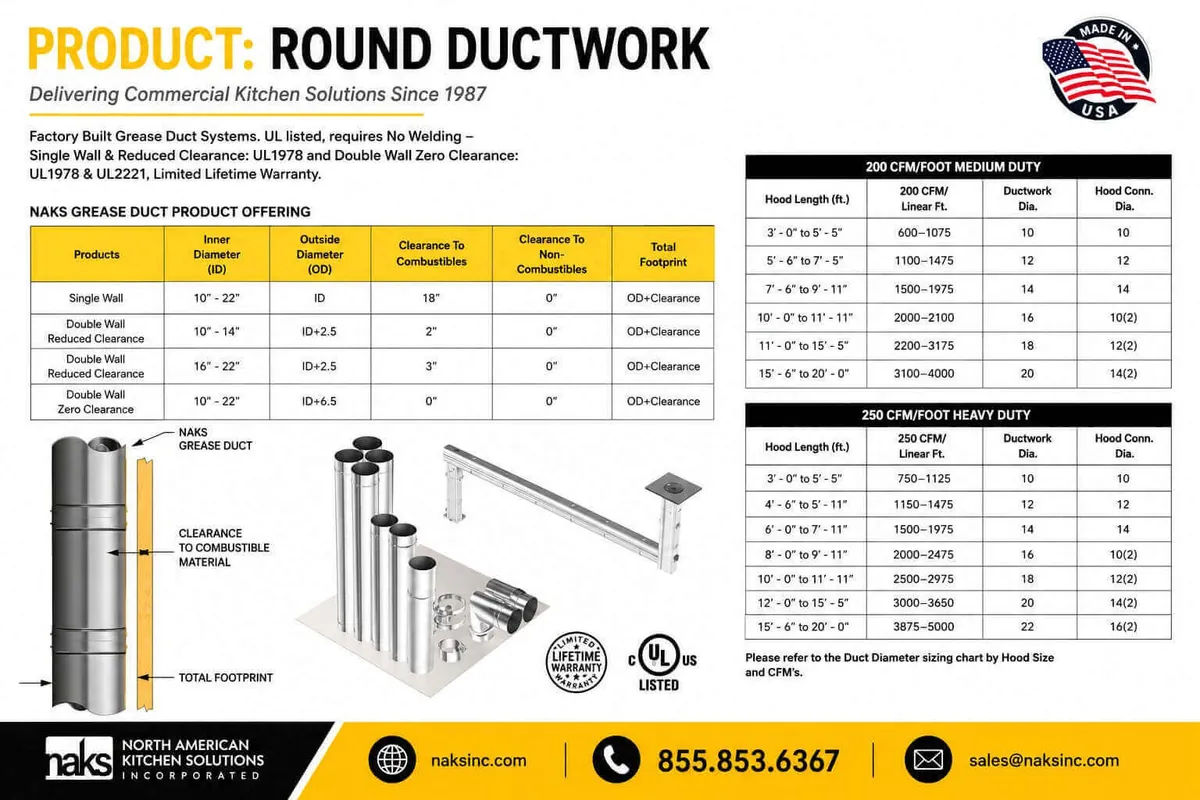
NAKS, Inc. offers complete kitchen ventilation ductwork solutions designed to meet any installation requirement, including:
- Single-wall grease duct systems
- Double-wall reduced clearance grease duct
- Double-wall zero clearance duct systems
- UL-listed no-weld hood adapters
- Complete hood vent ductwork packages
These solutions provide flexibility while maintaining safety, performance, and compliance.
Choosing the Best Kitchen Ductwork for Your Project
The right choice between welded and no-weld grease ductwork depends on several factors:
Welded ductwork may be best for:
- Large or complex installations
- Projects requiring maximum structural durability
- Highly customized duct routing
No-weld ductwork may be best for:
- Faster installation timelines
- Reduced labor costs
- Standard commercial kitchen installations
- Projects prioritizing installation efficiency
Both options provide reliable performance when properly engineered and installed.
Why NAKS, Inc. Leads in Commercial Kitchen Hood Ductwork
NAKS, Inc. provides innovative solutions for modern commercial kitchen ventilation, including industry-leading no-weld grease duct systems.
Our solutions help installers achieve:
- Faster installation times
- Reduced labor costs
- Improved safety
- Reliable UL-listed compliance
- Long-term ventilation performance
Contact NAKS, Inc. today to request a quote and learn more about our complete kitchen ventilation ductwork solutions.
Frequently Asked Questions About Commercial Kitchen Ductwork
1. Is welded grease ductwork better than no-weld ductwork?
Both options are safe and code-compliant when properly installed. Welded grease ductwork offers maximum durability, while no-weld ductwork provides faster installation, lower labor costs, and excellent performance for most commercial kitchens.
2. Does no-weld kitchen ventilation ductwork meet fire safety codes?
Yes. UL-listed no-weld grease ductwork meets strict safety standards, including UL 1978 and NFPA 96 requirements, ensuring safe containment of grease and exhaust.
3. Why do installers prefer no-weld hood vent ductwork?
Installers prefer no-weld systems because they install faster, reduce labor costs, improve jobsite safety, and provide reliable performance without the need for welding grease duct on-site.
4. What is the purpose of commercial kitchen hood ductwork?
Commercial kitchen hood ductwork removes heat, smoke, and grease-laden vapors from the kitchen. Proper grease ductwork improves air quality, protects equipment, and reduces fire risk.
5. Can no-weld ductwork be used in all commercial kitchens?
Yes. No-weld grease ductwork is suitable for most commercial kitchen ventilation systems, provided it meets UL listing requirements and is installed according to NFPA 96 and local code standards.